Thursday, 30 January 2014
Boosterism - is it always desirable?
Tuesday, 29 October 2013
Celebrations of place by the many artists’ networks across Yorkshire are another dimension of the growing confidence in the region’s cultural product – events such as York Artists Open Studio Days remind tourists and residents alike of the wide variety of high quality visual and decorative art being produced locally. And the performing arts are not losing out either – whether it is established venues like the Stephen Joseph Theatre still celebrating the work of Alan Ayckbourn, or the lesser known Pocklington Arts Centre delivering a broad programme of events that appeal to both locals and tourists, we are blessed with a richness of cultural product.
Today’s announcement by Lonely Planet was timely in that it coincided with a trip to Scarborough -one of the UK’s leading tourist destinations – by 8 students from Leeds Metropolitan University’s MSc programme in Responsible Tourism Management (photo shows Rashad from the USA, and Diana from Uganda, plus three former residents of the town). We had arr
So even the initial presentation on the history of tourism in the resort by Nick Taylor, the Council’s Investment Manager, wasn’t held in the Council building but in a local café so that from the start we were also benefiting a local business. Lunch in another café was followed by a stroll through the Old Town up to the Castle and an examination of how English Heritage is investing in product development and events to make sure that this scheduled ancient monument plays its role in delivering a high quality tourist experience for much of the year
Wednesday, 25 September 2013
Peace Parks, Mountain Communities and Tourism
Fortunately, many years ago and in a prescient bout of literary high-mindedness, I had bought a copy of Kadare's 'Broken April', a novel set in Albania and that has many evocative descriptions of the way of life in mountain communities in that part of the Balkans in the middle of the last century. From there it was a short stretch of my imagination to pick out some relevant passages from Roger Hutchinson's 2006 book 'Calum's Road', which tells the story of one man's endeavours to construct a road to connect his remote croft with a metalled road some miles away on the small Scottish island of Raasay.
Reading both of those books reminded me of the struggles faced by rural communities and of the ways in which individuals and groups can overcome many of these challenges where they can see a resulting benefit. And that in turn took me to Village Ways, an amazing initiative that was set up to support a handful of communities on the periphery of India's Binsar Wildlife Sanctuary in their efforts to develop responsible hiking tourism. Funded partly by a UK philanthropist but run very much on business grounds, the company now operated in several locations across India as well as elsewhere in the world.
In each case, the principles are the same - the community dictates how much tourism can happen, where tourists can walk when around the village and what the nature of any face to face engagement should be. Teams from every participating village provide trained guides, porters, cooks and cleaners. Hikers stay in purpose-built guest houses that are basic but comfortable, and walk from village to village through stunning scenery. All stakeholders in each community receive a small financial benefit from every bed night sold in their village, with some of the receipts being distributed to individuals and families, and the rest collectively for the benefit of the village (one community we visited had spent its money on an electric fence to keep boar and deer out of their crops).
So my talk focused on the Village Ways experience as a template for what could be achieved in the mountainous areas on the borders of Albania, Kosova and Montenegro where the B3p project is working. I hope that by sharing a success story from another continent, I was able to help the Trustees, officers and members of the Balkans Peace Park Project with some guidance on how they could begin to build on the capacity building work they've been doing in recent years.
For more information on these two great initiates, see:
www.villageways.com
www.balkanpeacepark.org
Saturday, 7 September 2013
What makes a great destination?
I moved to North Yorkshire in 2000, tired of commuting between my home in the market town of Haddington in East Lothian and the business I had taken over in Malton, another market town nestling on the edge of the Howardian Hills. At the time I was reluctant to move, having enjoyed more than 10 years of life in the East of Scotland with its magnificant beaches, quiet moorlands, small historic burghs and of course cosmopolitan Edinburgh.
I wasn't a stranger to Yorkshire, having been brought up just to the north in County Durham - day trips to places like York or the Northern Dales were always fun; visits to relatives in Leeds a compulsory part of the journey to or from my grandparents' house in the Potteries. But when I moved south that July morning in 2000, I don't think I really appreciated quite what an amazing place I was coming to. And the attributes that make it such a great place to live are also those that make it such a great tourist destination.
In my job at Leeds Met University, where I have taught on the MSc in Responsible Tourism Management for more than 5 years, we spend quite a lot of time helping our students develop their thinking on this topic - how to create destinations that are attractive places for people to live in; to make sure that the host communities are able to benefit from tourism in ways that they want, and to make sure that the competitive advantage of these destinations is such that the destination is able to attract tourists who really appreciate what is on offer.
So what do I think is so special about Yorkshire?
- the sheer variety of landscapes - from the gentle curves of the Wolds, via the sheer cliffs at Flamborough and the flatness of Spurn, to the wild heather moorlands of the North Pennines
- our archaeological and built heritage - every period of our history is well represented in the portfolio of properties protected and managed for access by English Heritage, the National Trust and a whole host of volunteer and charitable groups. In particular, everyone should know our 2 World Heritage Sites - Rievaulx Abbey and Saltaire
- our wildlife - Yorkshire is at the forefront in developing wildlife tourism in England through the Yorkshire Nature Triangle project, for instance
- our arts - performing, fine, public
- the food - we have seen massive developments in local sourcing of food in recent years, particularly seafoods and game
- the opportunities for outdoor recreation - some years ago I was privileged to lead the team that prepared an adventure tourism strategy for North Yorkshire, looking for opportunities to invest in a range of activities including mountain biking, surfing, caving, rock climbing and airsports
- the people - quirky, funny, proud and welcoming
- our events - from Leeds Fest to the current Bird Migration Festival at Spurn Point, from the Leeds West African Carnival to the Bradford Mela and of course, next year's Grand Depart 2014
So my final comments, for those of you who are reading this and who haven't every visited Yorkshire. If you want to experience a sample of what we've got, get in touch when you're here and I promise I'll take you for a pint of beer or a cup of tea. And if you want to know how we did it, come and study tourism at Leeds Met University !
Saturday, 10 November 2012
How tour guides can make or break a visit
Tour guides are an integral part of the visitor experience in many destinations and often make the difference between a good experience and an outstanding one or, sadly, what potentially could have been a good experience and one that instead lives on in the memory for all the wrong reasons. I have recently returned from a holiday in the US where I had the misfortune to experience three examples of tour guiding that, for various reasons, showed that there is still a long way to go in terms of delivering an excellent experience that really meets the tourists’ needs.
Of course, anyone of my generation (born 1960) automatically thinks of Skippy the Bush Kangaroo, the popular tv programme from the 60s and 70s. So I was always going to find it hard taking him seriously from the outset. But about 2 minutes into the trip, whilst my wife and I were still getting to grips with paddling a double kayak (I’ve canoed a lot in the past, she never has), he admitted that he wasn’t a proper guide, but was filling in for someone who hadn’t turned up. In fact, he told us, he was a professional cage fighter based in Ohio and was just in Assateague for a few days visiting family. So we had paid well in excess of $100 to rent a kayak for a couple of hours and spend it, not getting an informed insight into the ecology of the wetlands and backwaters, but instead trying to decipher the drawl of someone who had obviously been kicked in the head one too many times. His lack of biological understanding became evident when, on seeing a Tern, Skippy tried to convince us that the Tern family are basically a cross between an Albatross and a sparrow! I must admit, I’ve not checked this out with David Attenborough or anyone else from the BBC Wildlife Unit, but I’m pretty sure that if this was the case, ‘Life on Earth’ would have made this clear. So we went from random information overkill to nonsense information overkill.
Why have I been rabbiting on about this? Well, we spent around $150 between us on admission tickets for these three experiences, and apart from catching the sun during the kayak trip and getting bitten to buggery by mosquitos and other bugs on the Jamestown tour, we’ve got nothing to show for that investment. Apart from a couple of impressions that we can use at dinner parties to entertain friends. Oh, and we’ve already told anyone who will listen which historic properties in Annapolis and Williamsburg NOT to visit, and which company NOT to use for an ‘ecotour’ around Assateague. It was the end of the season, perhaps site operators were getting lazy or complacent. But there is no excuse not to deliver the highest standards of tour guiding to every party. Otherwise, all you get is bad press!
Thursday, 8 November 2012
World Travel Market - seminar on visitor payback
Tuesday, 3 July 2012
Saturday, 2 June 2012
Place friction and community economic development
Monday, 5 March 2012
Corporate Social Responsibility and the Meetings Sector
As well as developing business performance with suppliers, having a CSR policy also demonstrates credibility and trustworthiness to clients and, to some extent, still provides some market differentiation. However, external pressures are such that it is likely that engagement with CSR will grow across the sector in the next 5 to 10 years with more and more people following the current industry leaders. This in turn is likely to be the ‘tipping point’ needed for the more committed organisations to convert their current approach to engagement, which tends not to be recognised with external accreditation, into something that is recognised by one of the several accreditation initiatives. We certainly expect the launch of ISO 20121 later this year to focus people’s attention on the benefits of accreditation and there are some in the sector who feel that unless the industry as a whole engages more with voluntary standards, then there may be the risk of enforced regulation, particularly regarding environmental and social policies.
One final point that is of particular interest to the team, working as we do in Higher Education, is the emerging belief across the meetings industry that without a formal and coherent approach to CSR, employers may find it increasingly difficult to hire the best candidates. This generation, more than any other, is increasingly committed to finding employers whose ethics and world view reflect their own. Quite simply, if they don’t like the way you treat the environment and the community around you, they are unlikely to want to work with you either.
Tuesday, 17 January 2012
Pet tourism
A friend in New Zealand, the driving force behind http://www.caninespirit.co.nz/, is researching the topic of pets and tourism for her PhD. So expect more blogs on this topic in the future. And in the meantime, think about what you could do to help develop this niche market!
Thursday, 5 January 2012
Universities and destination development
Tuesday, 8 November 2011
Students as tourists or residents
There is a growing body of research that looks at how tourists engage with (or don't) World Heritage values in destinations, and other researchers have focussed more on how communities react to, and are affected by, WHS status. But no-one has yet looked at how students engage with WHS - they are short-term residents, spending 9 to 12 weeks at a time in the area, several times a year for 3 or 4 years. So according to UNWTO definitions, they are tourists. But their motivations for staying in the destination are very particular, and it is unlikely that WHS status had anything to do with their decision to travel to the city in question (whilst we are looking at Durham, there are many other WHS that have universities and colleges in their core).
Thinking of Durham in particular, the heritage of the peninsula, that part of the city ascribed WHS status, plays a key role in creating the atmosphere that is valued by many university students. Already, we have anecdotal evidence that students living in one of the colleges that looks on to the great East Window feel inspired by the view when looking at it from their rooms, whilst we know that the opportunity to graduate in a ceremony held within the cathedral is valued by some university alumni.
Our first phase of primary research will start next week, with the first public presentation of our findings being at a conference Liz is attending in the Caribbean in January. That will be followed by another presentation at a one-day seminar on Communities and World Heritage we are hosting in Durham in March, and finally a paper that will be submitted to a leading academic journal some time in the spring.
Monday, 10 October 2011
Responsible Tourism around the Mediterranean
I am a geographer by academic background and what really interests me about this situation around the Mediterranean is what impact there will be on tourism flows? Will there be a major increase in outbound tourism to Turkey as Europeans continue to search for their two weeks of sunshine? Or will the emerging destination of the Azores take up some of the demand diverted away from the MENA region in particular? And where will Morocco go? It gets a lot of business from Spain but with a major recession there, it may see numbers fall. Yet it too has experienced some unrest and analysts believe that it too may still see changes. And what the tourism sector needs is certainty, not uncertainty.
So - it is going to be an interested few months and we should watch the early UNWTO returns for 2011 with a lot of interest, to see who really has benefited from these major changes happening around the Med. One thing we know for sure though, is that the residents of these countries will feel these changes far more than we ever will.
Monday, 4 July 2011
Family holidays in the Lake District
At a time when budgets are squeezed, and when the UK tourism sector is seeking to strengthen awareness of its potential as a destination for a main holiday, those in charge of developing and marketing the Lakes have much to be proud of. True, there were a few blatant attempts at price-gouging (£14.95 for a DVD with 80, mainly blurry, photos of the Via Ferrata trip was a rip off - shame on you Honister!) but by and large everything was good value. The weather was OK and the company great. For my first 'main' holiday in England since 1977, I couldn't have chosen a better place.
Thursday, 14 April 2011
An 'Evening With' ICRT students and alumni
Tuesday, 12 April 2011
ICRT 'Evening With'
Monday, 7 March 2011
Valuing cultural heritage
I’ve been thinking quite a bit recently about how to demonstrate the value that some groups in society place on their cultural patrimony. My interest in this topic was re-awakened by reports last month that the protestors in Cairo’s Tahrir Square had set up a protective zone around the Egyptian Museum next door to prevent looting and damage to the priceless assets contained therein. Although there was some minor damage and a small number of statuettes were stolen, this seems to have happened in only one incident. Recent reports from the former head of the Supreme Council for Antiquities, Dr Zahi Hawass, suggest that there has also been some damage around the ruins at Saqqara and in some other locations. But in the main, the Egyptian people have respected the legal protection afforded to some of the richest archaeological remains in the world.
One compares this with the situation a few years ago in Iraq, when there was widespread looting in the national museum in Baghdad, with many items still missing and presumed destroyed or sold on the black market. And the damage to the ruins of the ancient city of Ur by US marines who used the site as a base to oversee the downfall of Saddam Hussein was not only a violation of trust but also a clear illustration of the lack of awareness, appreciation and understanding of the enormously rich heritage of the region still prevalent amongst many people.
News coming out of Libya also gives some cause for concern, with reports that some archaeological sites are being damaged in the struggle between pro- and anti- Gaddafi forces. In all three cases, there are fundamental issues of national identity and political power being worked out and yet only in the Egyptian case have the protagonists gone out of their way to protect their patrimony. One wonders whether this is in part because they recognise the enormous contribution that such assets make to the development and sustainability of a responsible tourism sector that celebrates rather than diminishes cultures and their heritage. Perhaps we will never know what drove those Egyptian protestors in Tahrir Square to protect the treasures of the Egyptian Museum. But we should remember to thank them.
Wednesday, 16 February 2011
Fundraising at a sacred site
Thursday, 6 January 2011
The contribution of handicrafts to livelihoods in package holiday destinations
Working in partnership with ICRT students Louise Dixey and Yvette Evers and my colleague Lucy McCombes, I am commencing a desk-based review of the contribution that handicrafts make to the livelihoods of communities living in and around popular package holiday destinations. The research is being funded by the Travel Foundation, the charity funded by the UK’s main tour operators, and the findings will be used to establish what can be done in these destinations to increase the contributions that crafts make to local economies. Some of the destinations we are studying include Tobago, St Lucia and Jamaica in the Carribean; the Yucatan peninsula in Mexico, the area around Bodrum in Turkey and the Red Sea and Sinai resorts of Egypt.
A full report will be submitted to the Travel Foundation in early April 2011 and will include guidelines on specific projects that can be implemented in some of these destinations to enhance the quality of crafts available, improve market access for local producers and strengthen local linkages between suppliers of raw materials, the craftsmen and women themselves and the vendors who tend to sell the products on to the tourists.
Running in parallel with this work is another project that ICRT is undertaking on behalf of the Travel Foundation, this time focusing in on handicrafts in the Gambia. This work includes the first ever economic impact study of the sector in the country, an exercise that will allow us to examine which groups of craftworkers are most vulnerable to disruption and whose incomes suffer the most when tourist numbers fall off at the end of the season.
If you want to know more about the work that ICRT is doing in the traditional handicrafts sector, don't hesitate to get in touch
Friday, 15 October 2010
Heritage conservation in Saudi Arabia
Between 2006 and 2008 I led the team that prepared masterplans for the historic cores of four small cities on the coast, plans that although well received have yet to be implemented because of a lack of funding. So it was with considerable satisfaction that I have finally been able to see progress on the wholesale conservation of a historic village in Saudi Arabia. I have been asked by UNWTO – the World Tourism Organisation – to advise the successor organisation to the SCT – the Saudi Council for Tourism and Antiquities (SCTA) on what international awards their Historic Villages Conservation programme might be eligible for. Other than the internationally respected Aga Khan Awards (www.akdn.org) there are very few heritage or conservation awards for projects in the Arab World. My research has thrown up several awards for new architecture (inspired no doubt by the massive urban expansion across the GCC area but little that could, if awarded, bring to this innovative programme the international attention that it merits.
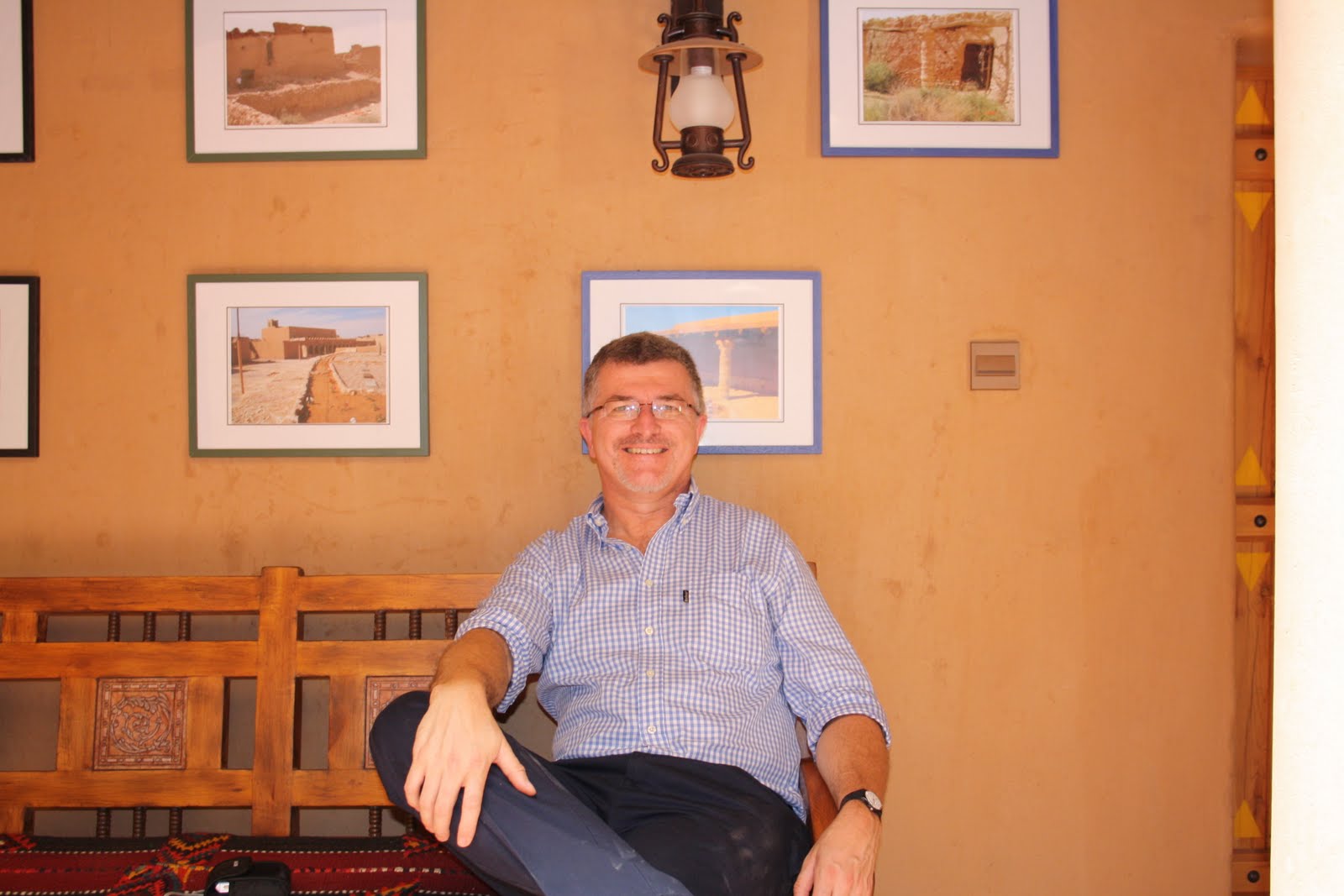
The photos are of a couple of the restored buildings in Al Ghat, a small town of around 12,000 people on the fringe of the Najd desert, some 250 km north of Riyadh. The traditional mud-brick houses and public buildings were abandoned around 30 years ago but because of the arid desert environment, have remained in fairly good shape since. In order to secure the support and participation of the community, a co-operative has been established by all of the property owners to take ownership of the project (all property rights have been transferred into the co-op) and to raise the funds necessary for the conservation of the buildings and their adaptation for tourism uses. A signature, pilot project has been funded directly by the SCTA, converting the former Amarah (governor’s palace) into a local history museum and the municipality has ensured that all essential services (water, electricity, sewerage, telecoms) are installed. Finally, a loan of SAR 7 million (more than £1.15 million) has been obtained from the government to kick-start conservation works across the whole village. One house, the traditional home of the Sudairi family, has already been completed and furnished as an 8 room lodge. More will follow as the village is developed and marketed as a destination mainly to the domestic market. Other attractions in the area include a new national park, many date farms (Al Ghat is famous for its high quality dates) and some amazing sand dunes.
On Sunday I head off to the mountains of Aseer in the west of the country to see Rijjal Al Maa, a village I first visited back in 2001 and where there has been sustained investment for a number of years, mainly by the community but also by the SCT/SCTA and also the municipality. Built from stone and decorated with quartz, the tower houses of Aseer are very different from the mud brick (adobe) buildings of the Najd and represented very different conservation challenges. But the opportunities for introducing tourism uses into the buildings are the same, and I will be interested to see what changes have been made since my last trip in 2005.
For more information on the SCTA’s work on conserving architectural heritage, visit http://www.scta.gov.sa/sites/english/Antiquities_and_Museums/InternationallyRegisteredSites/Pages/conference_on_heritage.aspx